

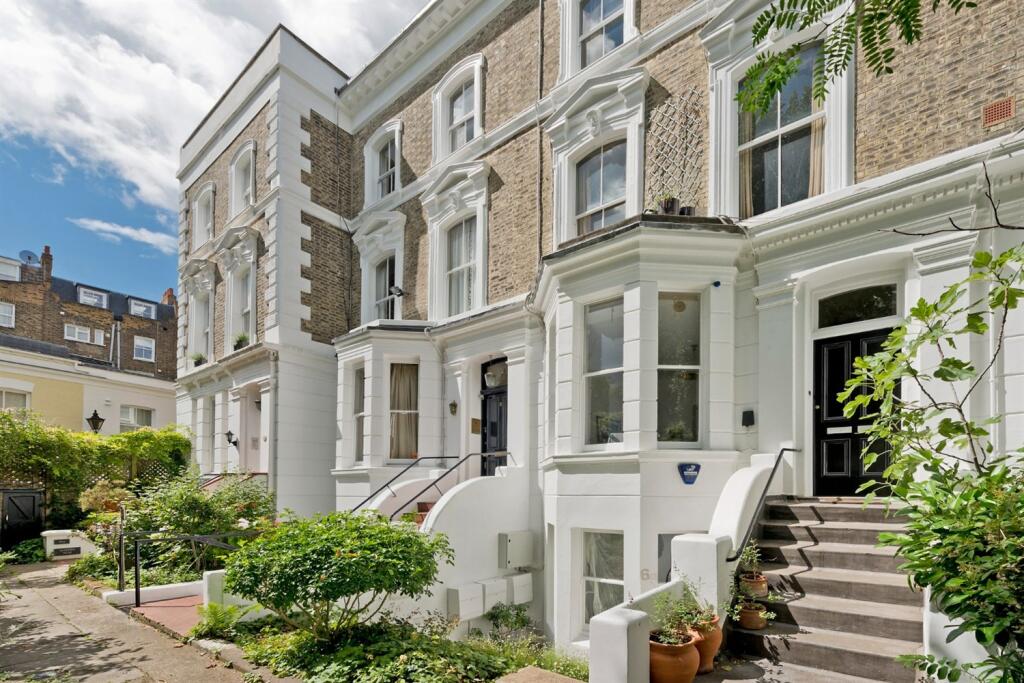
Facade restoration
We carry out full facade restoration and facade cleaning across London - survey the building, repair the stone and brickwork, renew the pointing, reinstate render and mouldings, and clean the elevation, under one scaffold and one point of responsibility. Most buildings do not need one trade; they need the whole facade put right in the correct order.
Whole-facade programmes
A facade fails as a system, not as a list of separate defects. Blown render, open joints, spalled brick and a soot-bound surface are usually the same water problem showing itself in four places, so we survey and price the elevation as a whole rather than patching one symptom at a time.
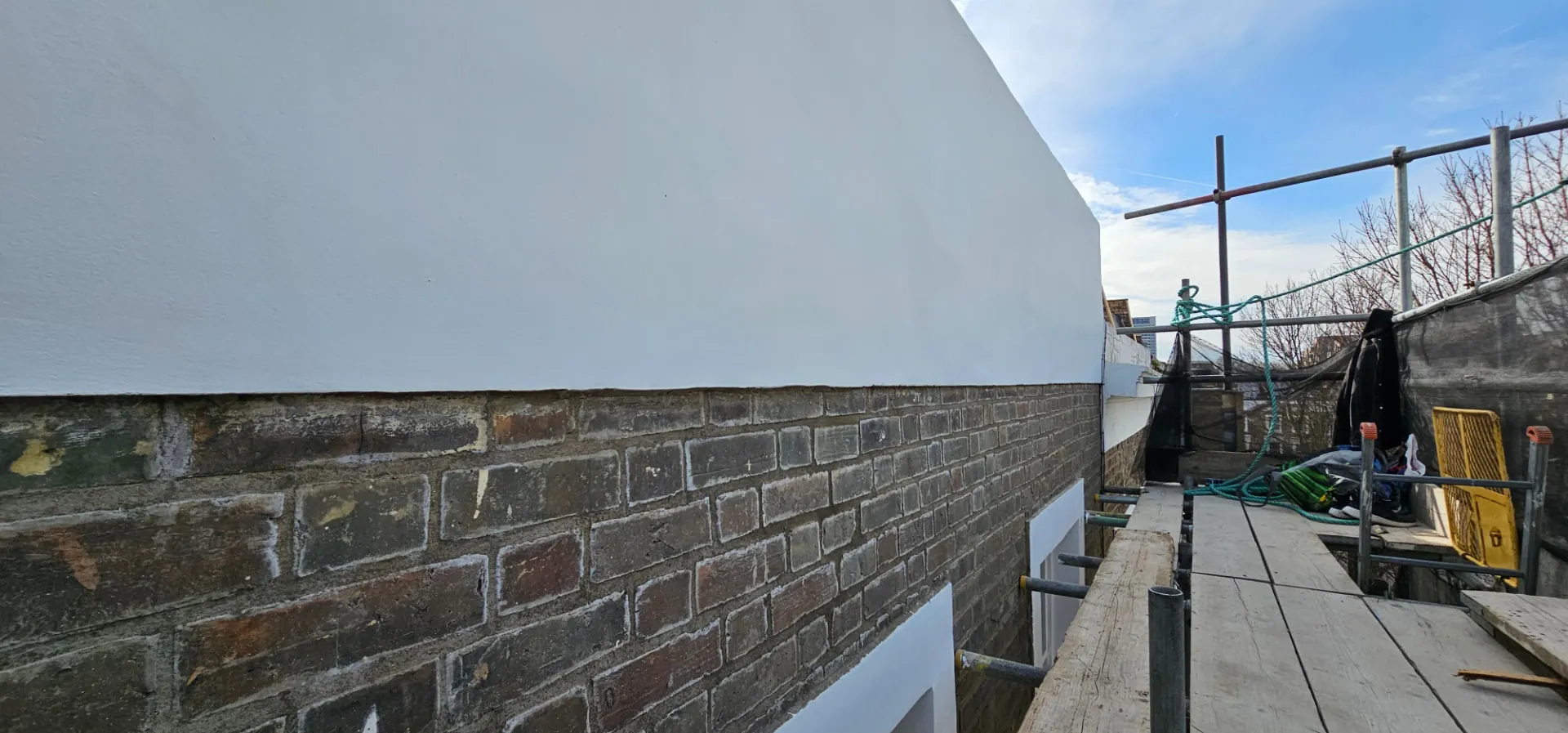
Works are sequenced so nothing is undone twice: repairs and replacement first, then repointing, then render and mouldings, with cleaning carried out at the point in the programme where it protects the finished work.
One team, one scaffold, one point of responsibility for the finished elevation.
Facade types we restore
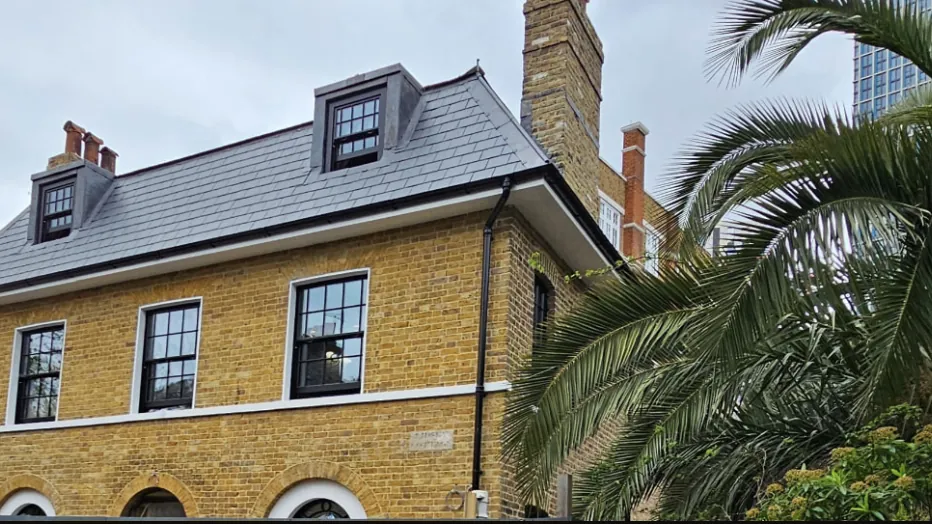
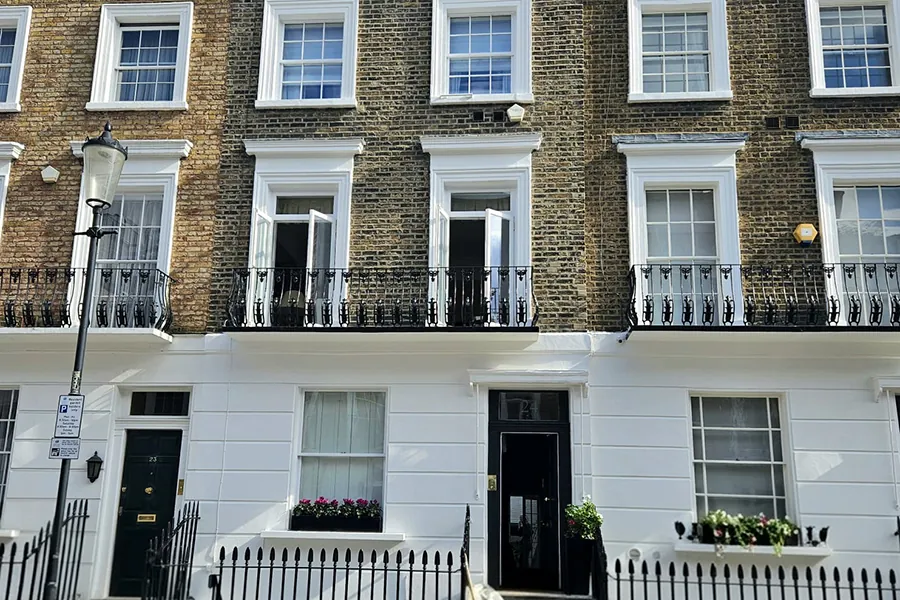
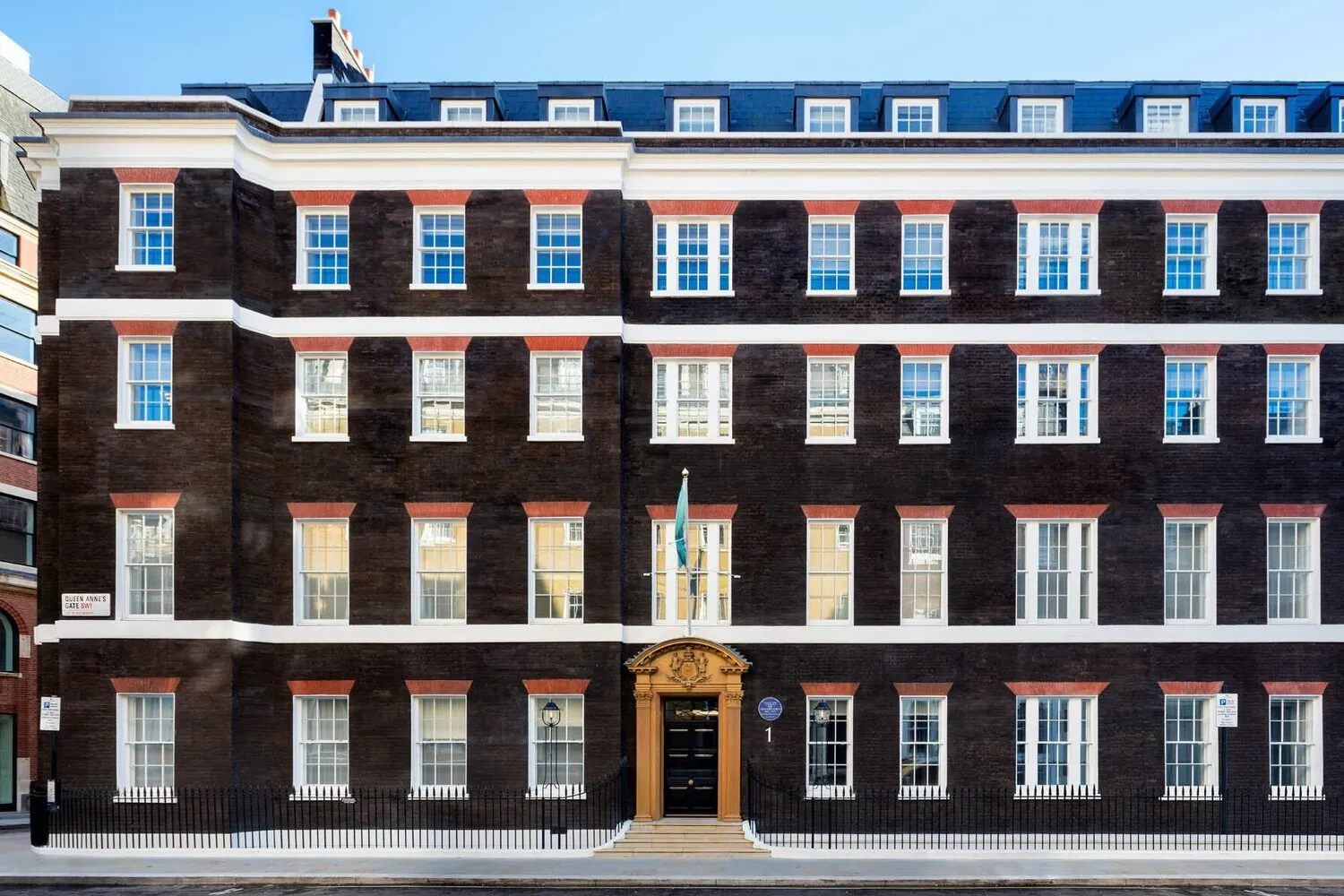
London's building stock changes street by street, and the right repair changes with it. Georgian and early Victorian stock brick with lime pointing behaves nothing like an Edwardian red brick mansion block, and neither behaves like a stuccoed terrace in Belgravia or Notting Hill.
We work across all of them: London stock brick elevations, gault and red brick facades, Portland and Bath stone frontages, stuccoed and rendered terraces, and mansion blocks combining brick with stone dressings, cills and cornices.
Each is surveyed on its own terms - the original mortar, the original substrate and whatever has been done to it since - before any specification is written.
Listed buildings & heritage facades
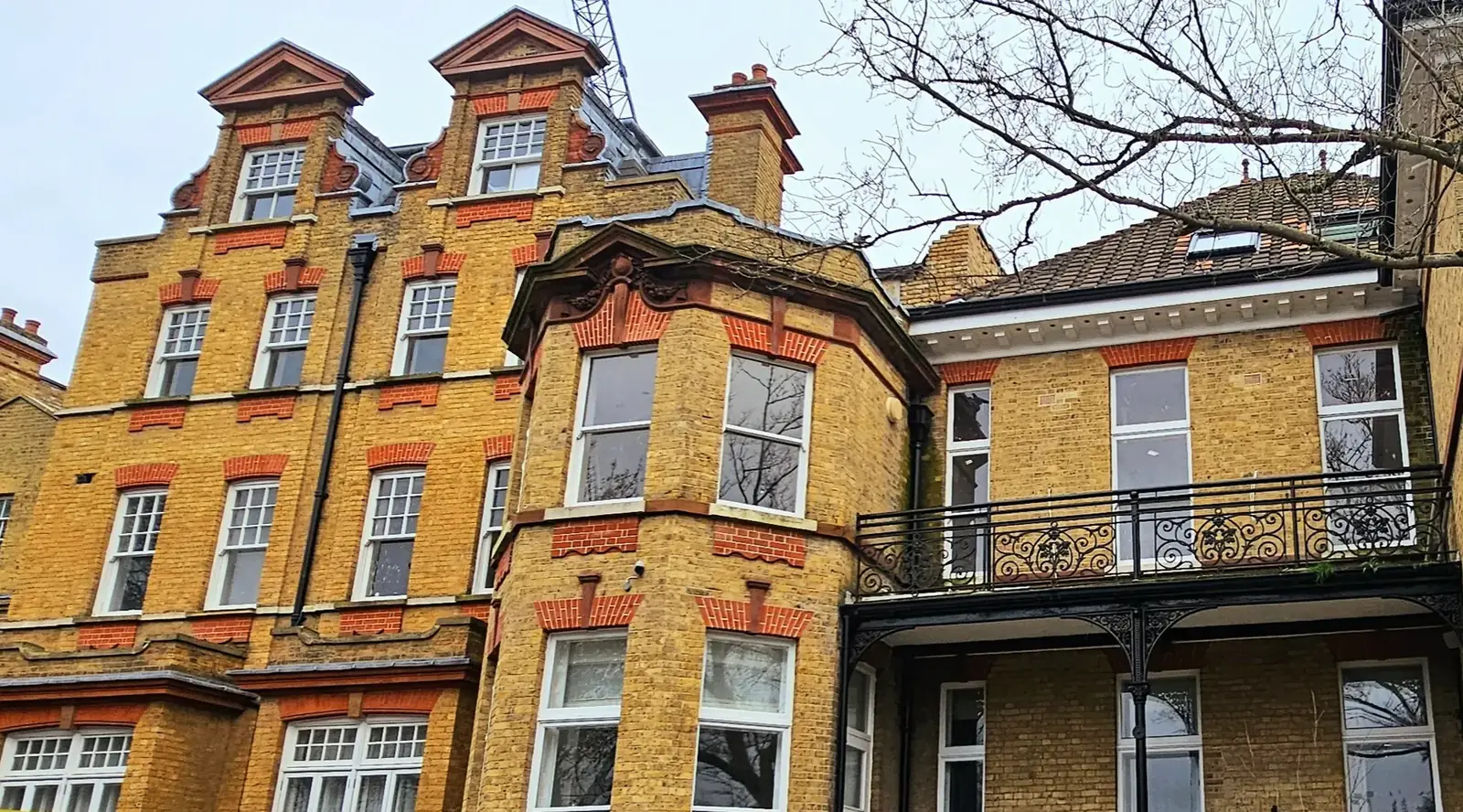
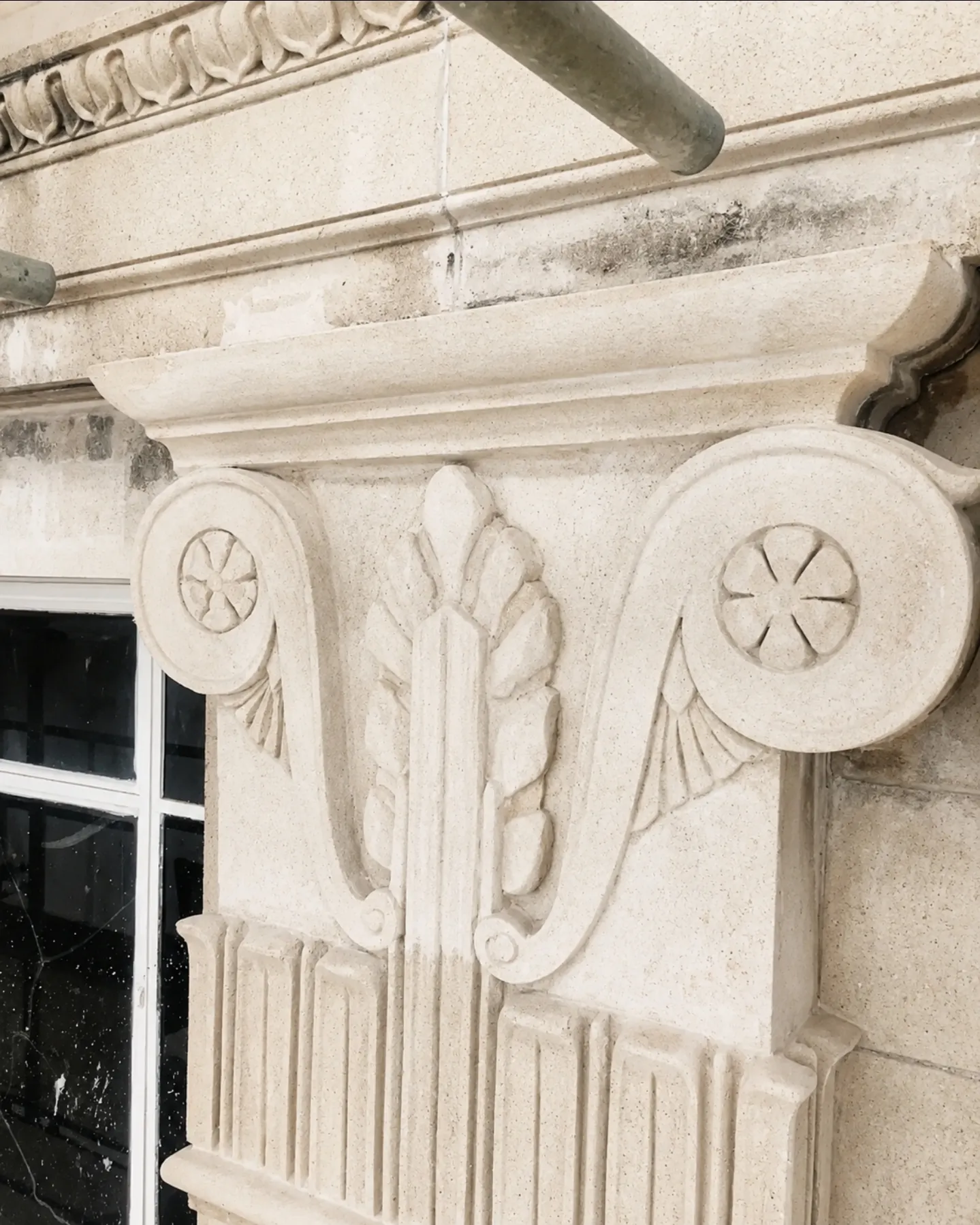
We work regularly on listed buildings, and in conservation areas where the appearance of the street is protected. Methods are chosen to meet conservation requirements from the outset - like-for-like materials, reversible repairs and the least intervention that will do the job.
Our team has worked on Grade I and Grade II listed buildings across London. Our dedicated listed building restoration and conservation service covers traditional masonry repairs, like-for-like materials and careful cleaning of historic fabric.
Facade cleaning
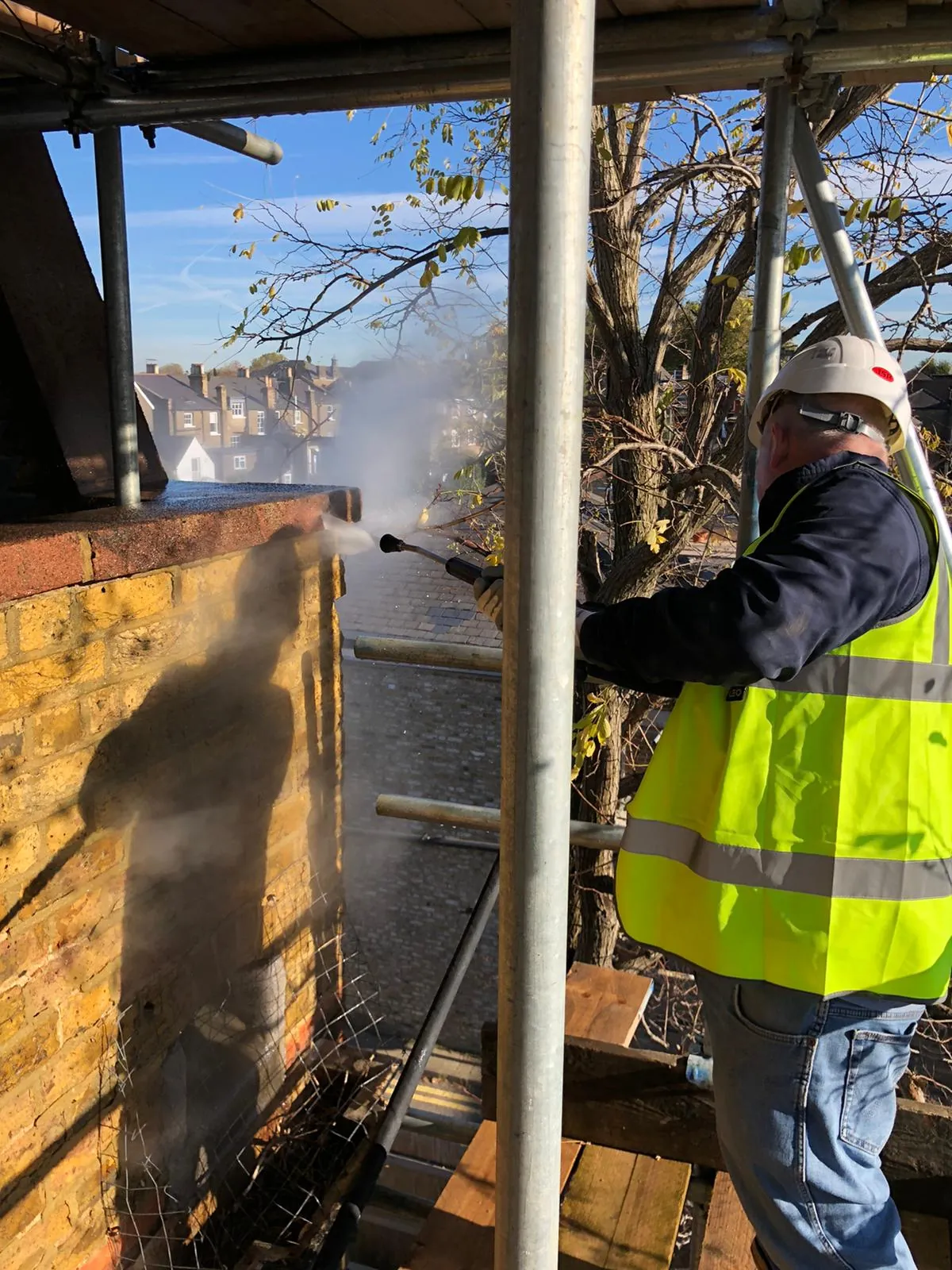
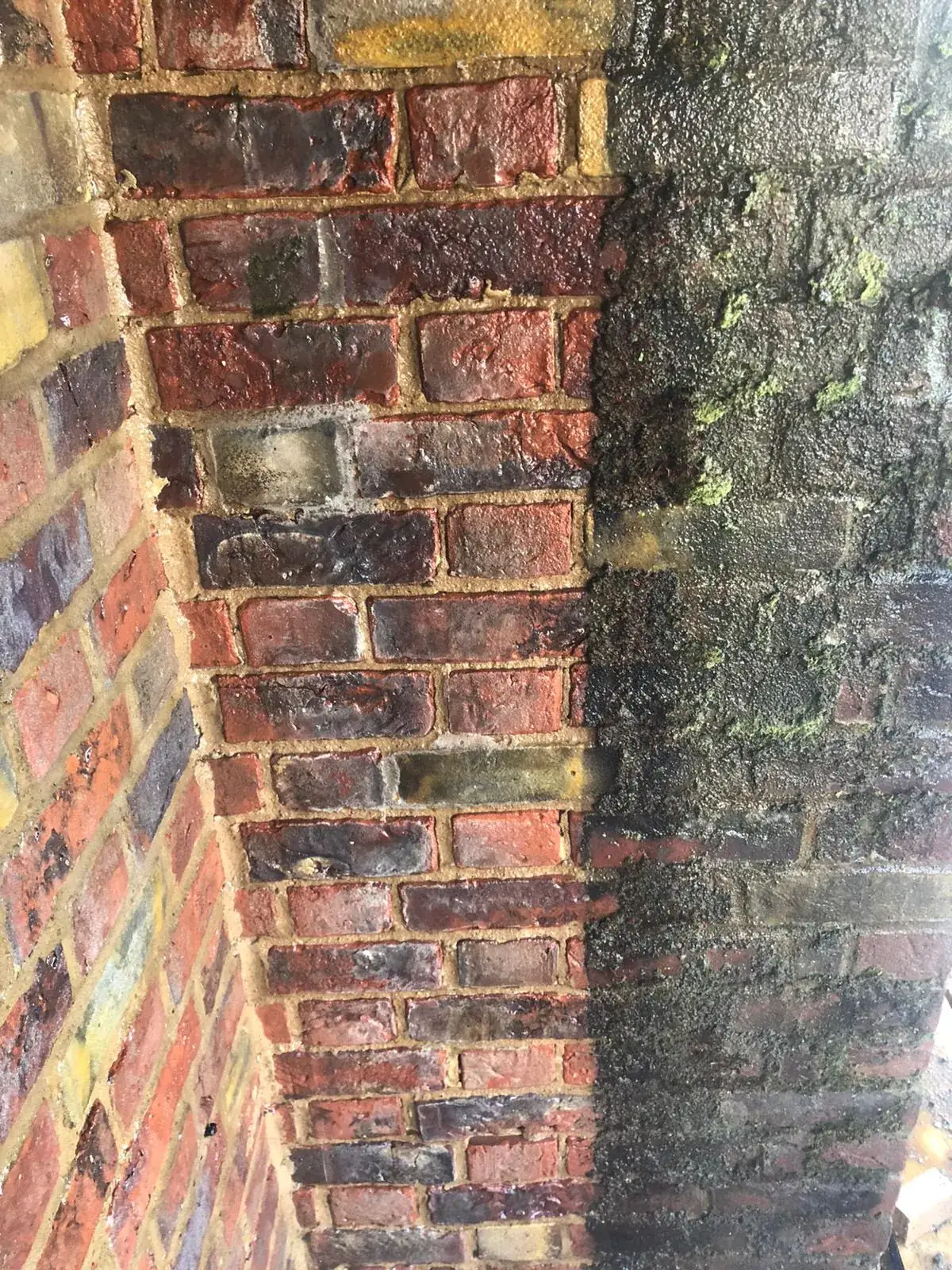
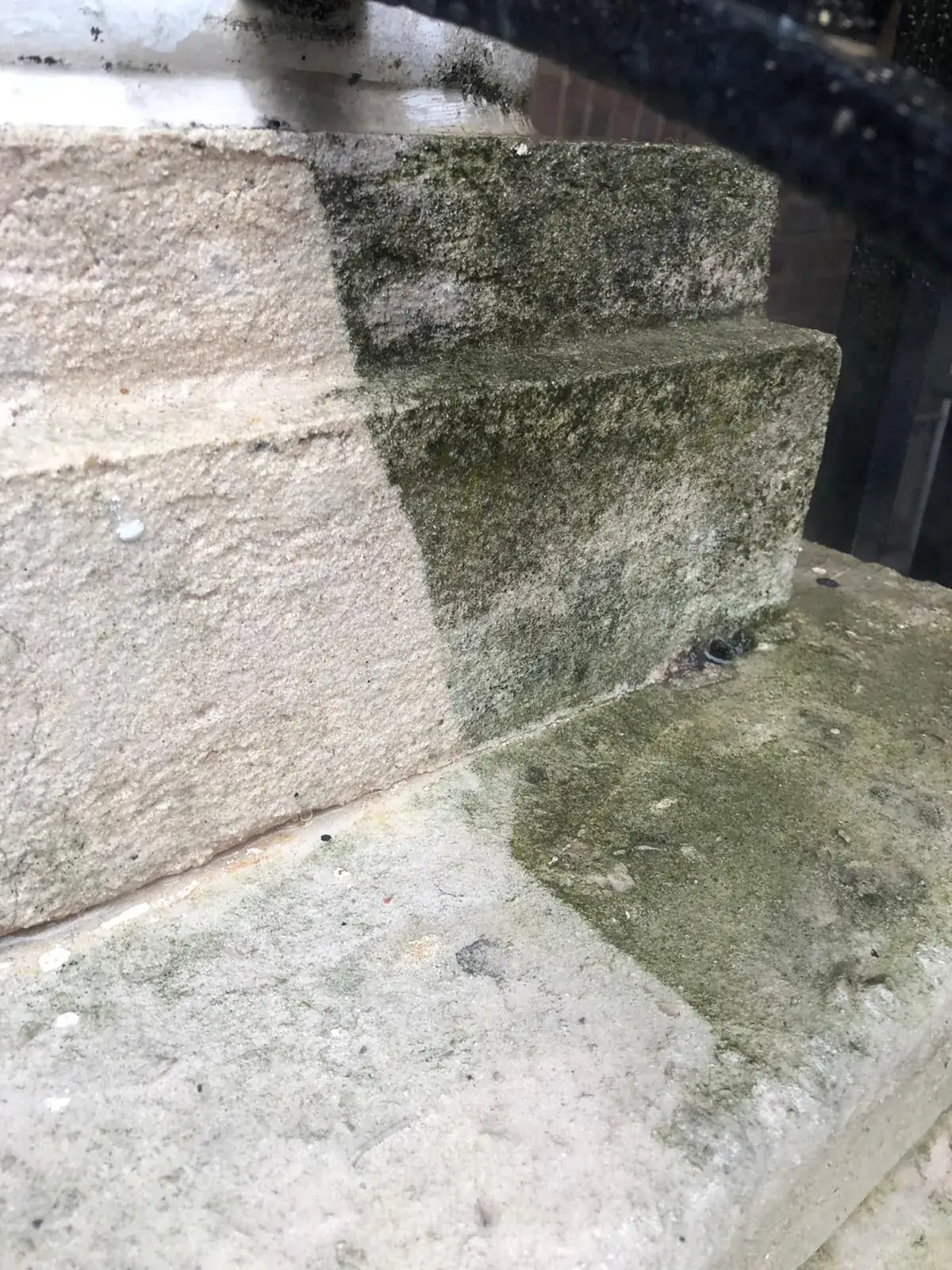
Most London elevations are carrying a century of traffic soot, sulphation, algae and old paint, and the cleaning method has to suit what is underneath it. We clean brick, Portland and Bath stone, stucco and render using conservation systems - DOFF and TORIK superheated water and steam, with temperature and pressure set to the substrate - rather than grit blasting or cold high-pressure water, which open up the surface and cause the soiling to come back faster.
Every facade is test-cleaned in a discreet panel first, so the finish is agreed before the elevation is committed. Paint, graffiti, carbon staining and organic growth all need different systems, and on a mixed frontage that often means more than one method on the same scaffold.
Cleaning is sequenced at the right point in the programme - after repair and repointing where the mortar needs protecting, before decoration where a render finish follows.
Conservation-led methodology
Old buildings were built to breathe. Cement mortars, plastic paints and impermeable renders trap moisture inside the fabric and push the damage into the stone and brick, which is why so much of our repair work is undoing well-meant repairs from the last fifty years.
We analyse the correct mortar to match the original, and test cleaning methods on the substrate before they touch the facade.
The aim is straightforward: keep as much original fabric as possible, and leave the building performing the way it was designed to.
Survey, programme and access
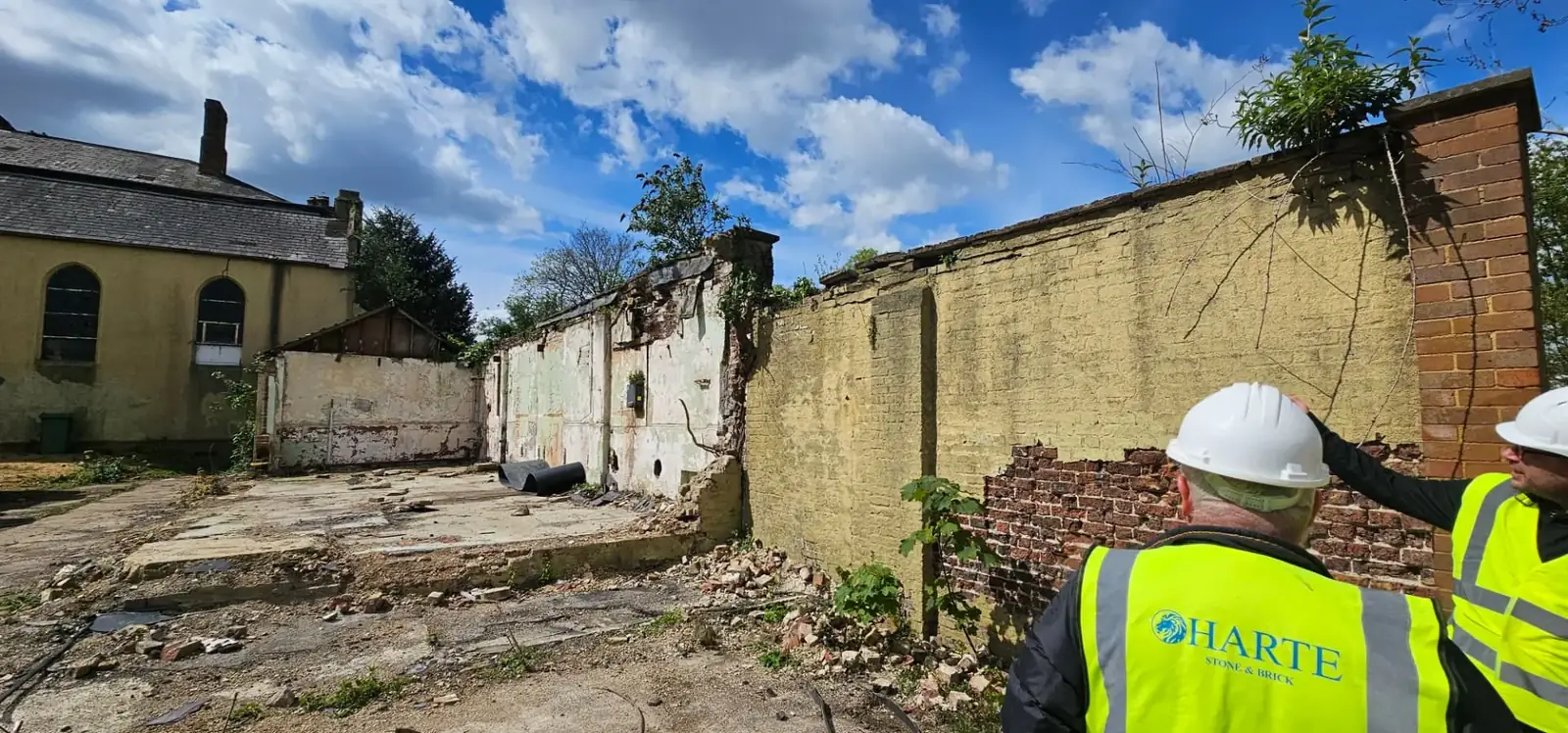
Every facade restoration starts with a survey. We look at the elevation close up wherever access allows, record the condition of the brick, stone, pointing and render, and identify where water is getting in and where it is coming out. That survey is what the specification and the price are built from - not a guess made from the pavement.
From there you get a written scope broken down by element, so you can see what is repair, what is replacement and what is cleaning, and make decisions on each.
Access is usually scaffold for a full elevation, with rope access or a mast climber where scaffold is impractical or a street licence makes it unworkable. Programme depends on the size of the elevation and the extent of repair - a single London townhouse frontage is typically a matter of weeks, a mansion block considerably longer.
Common questions
Other services
Talk to us about your project.
A few photographs of the facade are usually enough for us to understand the scope.