

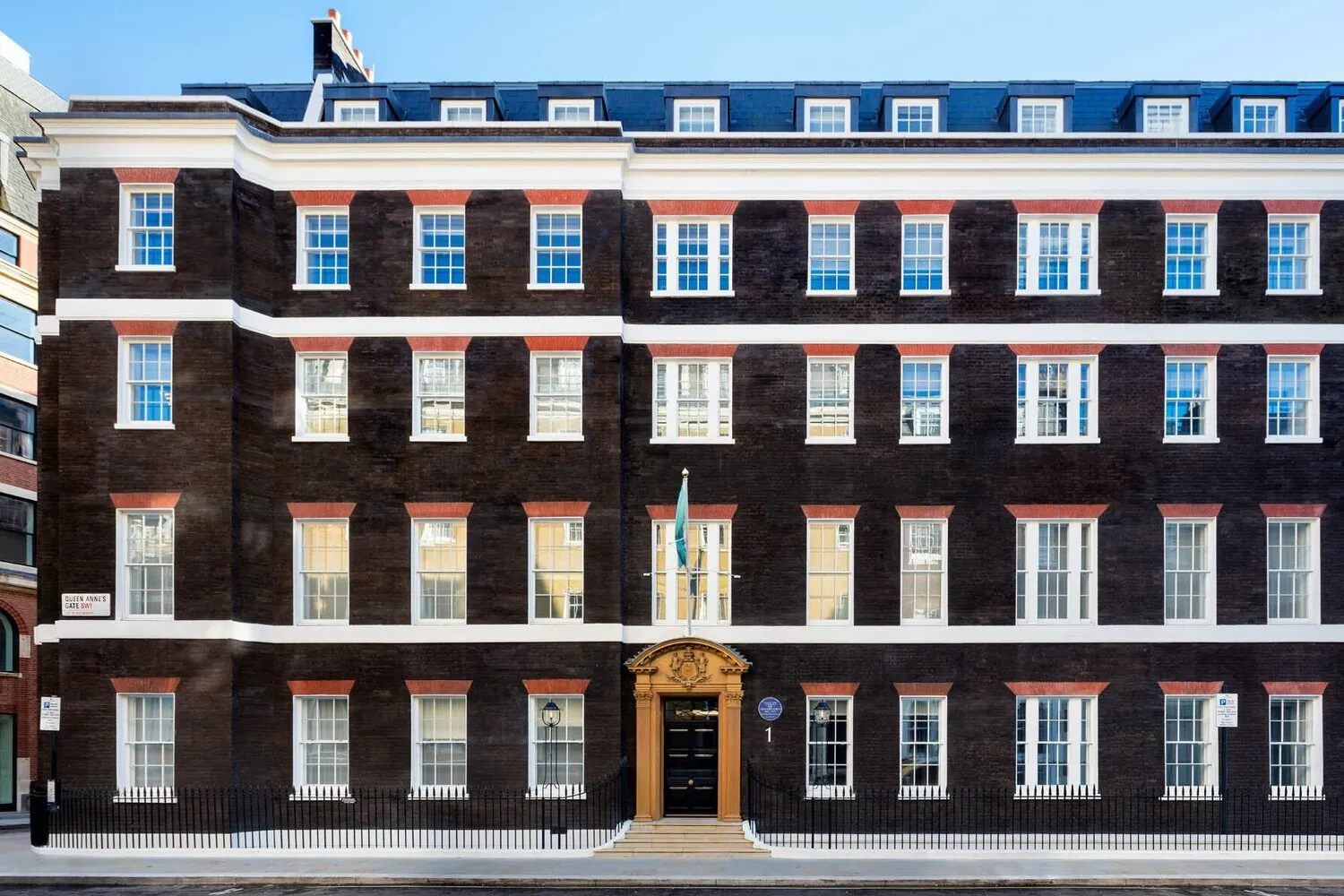
Listed building restoration & conservation
Listed buildings ask more of every repair: the mortar, the stone, the joint profile and the method all have to respect what is original. We restore Grade I and Grade II buildings across London in stone, brick, stucco and render, using traditional materials and conservation methods suited to the existing fabric.
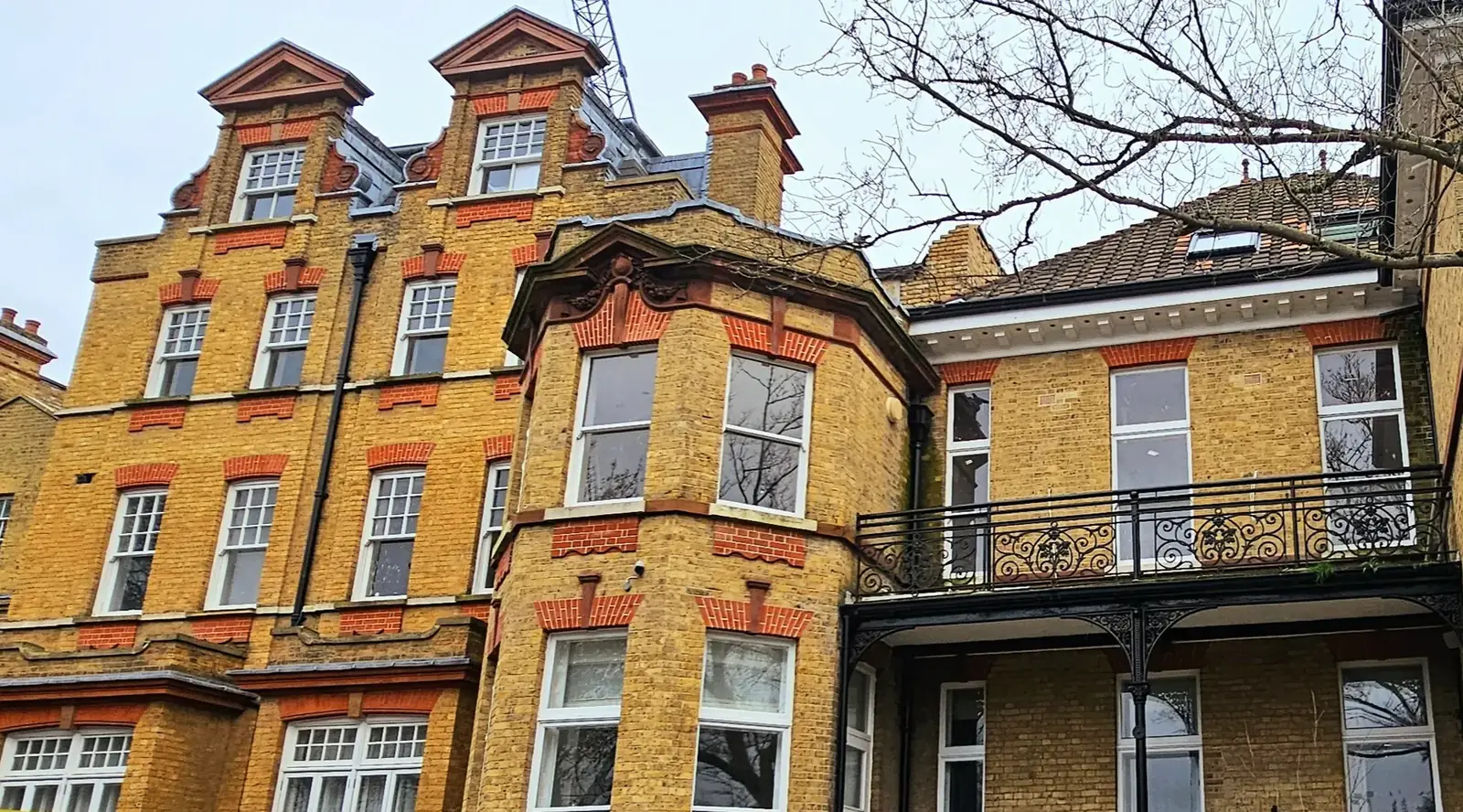
Listed building restoration and repairs
Listed buildings are not a different trade, but they are a different discipline. Every repair on a Grade I or Grade II building is judged against what is original: the mortar in the joints, the profile of the mouldings, the type and bed of the stone. We restore listed facades across London in stone, brick, stucco and render, working to the standard the listing demands rather than the quickest acceptable finish.
The work covers everything an elevation needs - stone indenting and replacement, brick repair and splicing, lime repointing, stucco and render renewal, and conservation cleaning with the DOFF and TORIK systems. Most jobs use several disciplines at once, drawing on our stone restoration, repointing, brick restoration, stucco and rendering, brick cleaning and stone cleaning services.
Where the whole elevation needs attention, listed repairs are usually delivered as part of a full facade restoration programme rather than as isolated fixes - one scaffold, one specification and one point of responsibility from survey to sign-off.
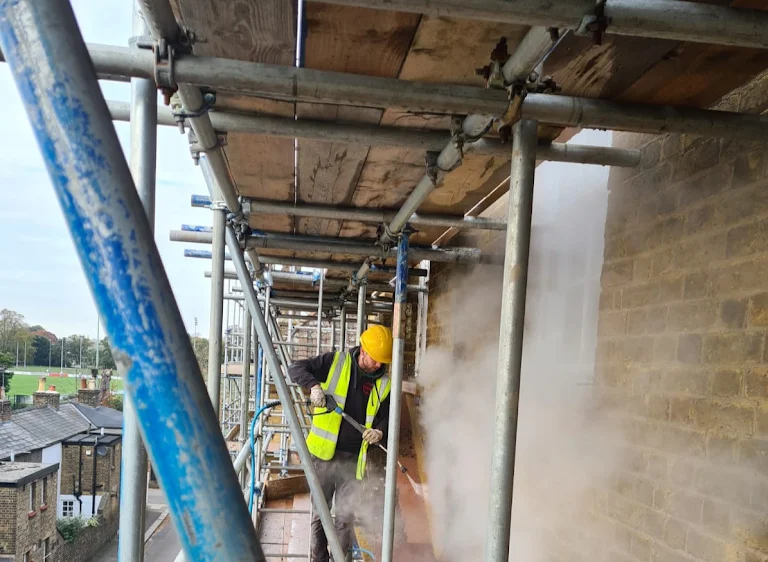
Conservation cleaning for historic fabric
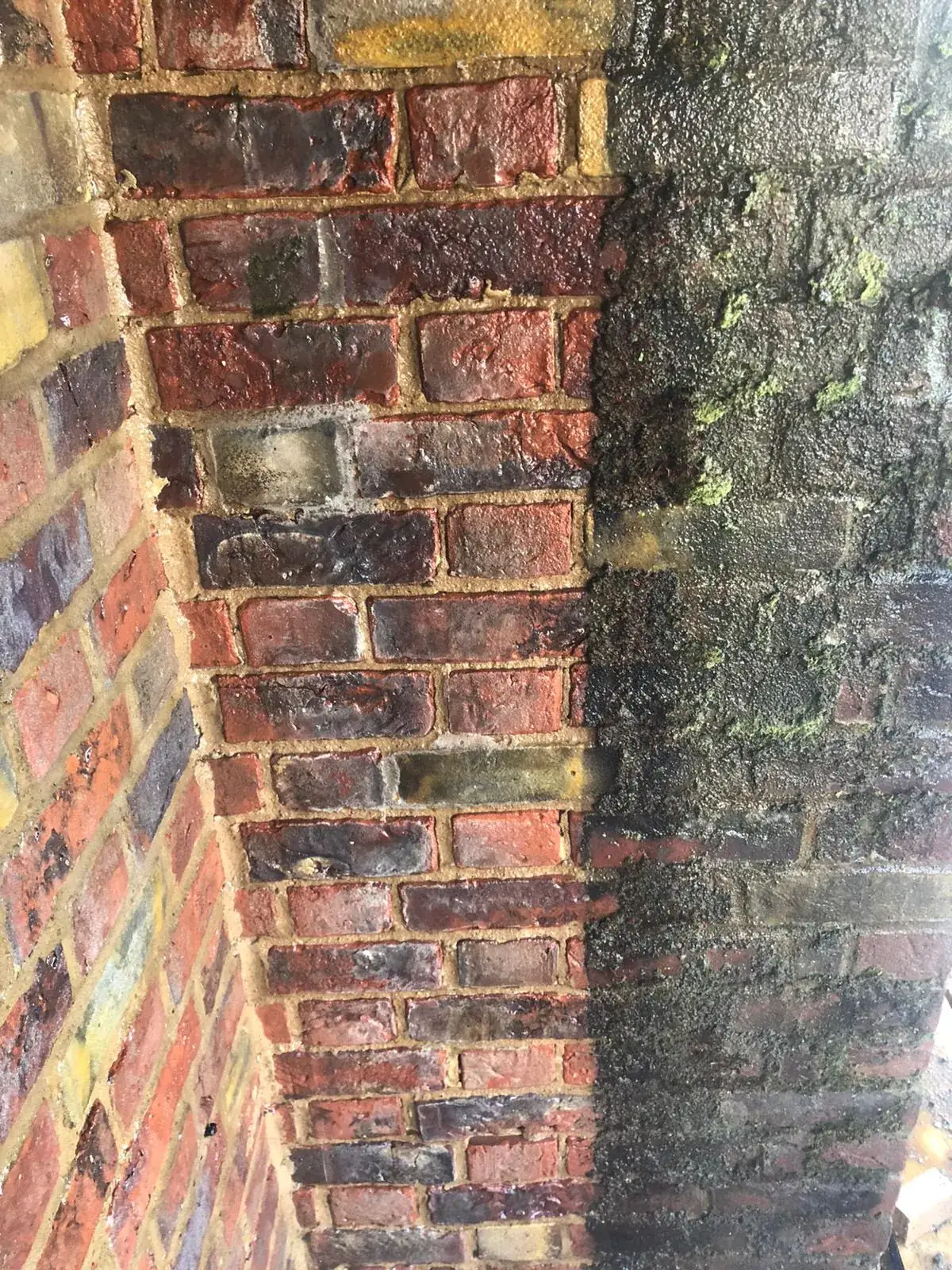
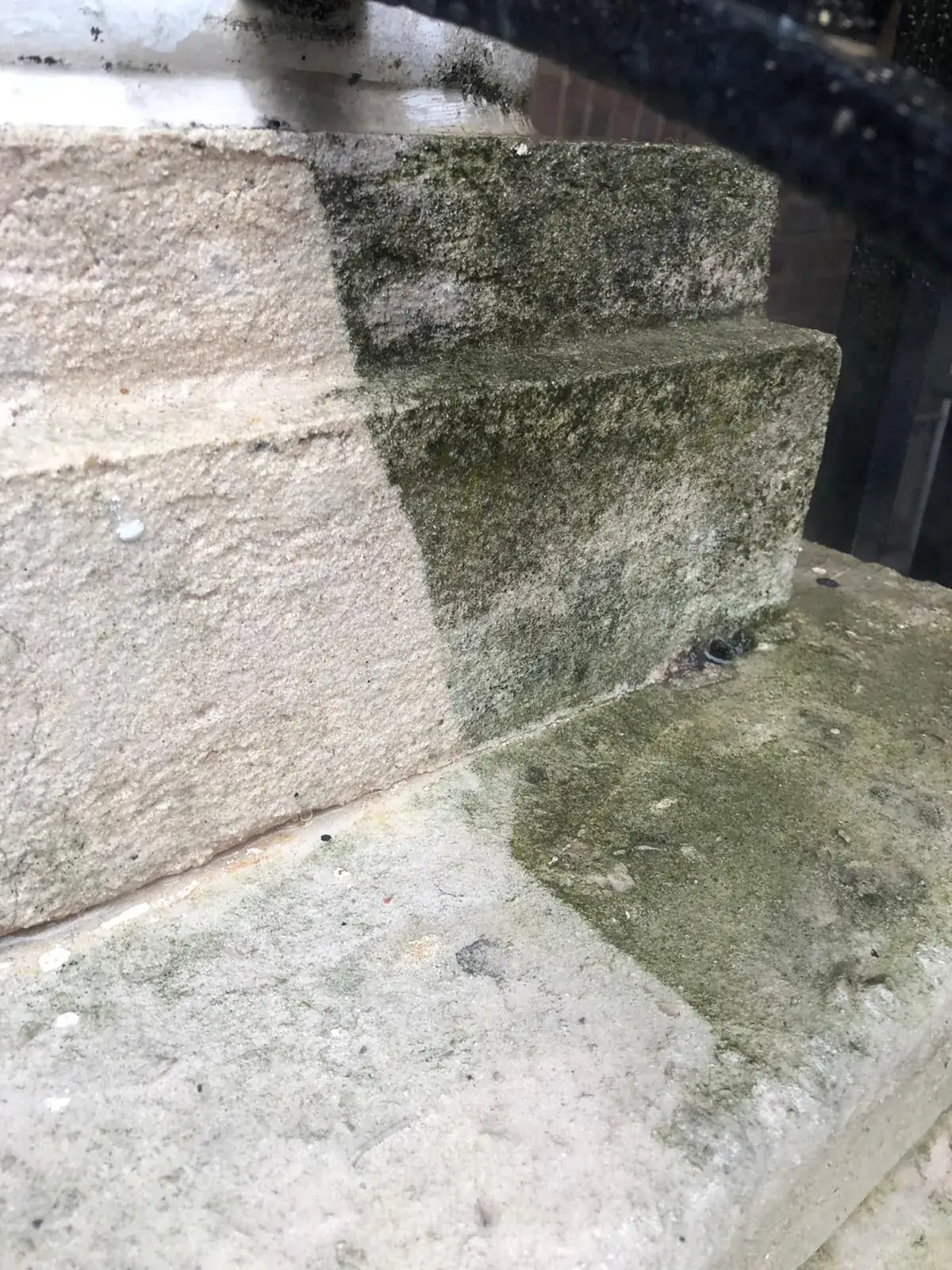
Historic brick, stone, stucco and render need a cleaning method chosen for the surface and the type of soiling. We use the TORIK and DOFF systems with heat, water and pressure controlled to lift carbon staining, algae, dirt and failed coatings without cutting into the original face beneath.
A discreet test area establishes the lowest effective setting and the finish before a wider elevation is cleaned. Mixed facades may need different settings or methods across the same building, particularly where softer stone dressings sit alongside brickwork or old render.
Cleaning also exposes the true condition of the masonry. Open joints, cracked repairs and decayed stone that were hidden under soiling can then be assessed and repaired with materials suited to the historic fabric.
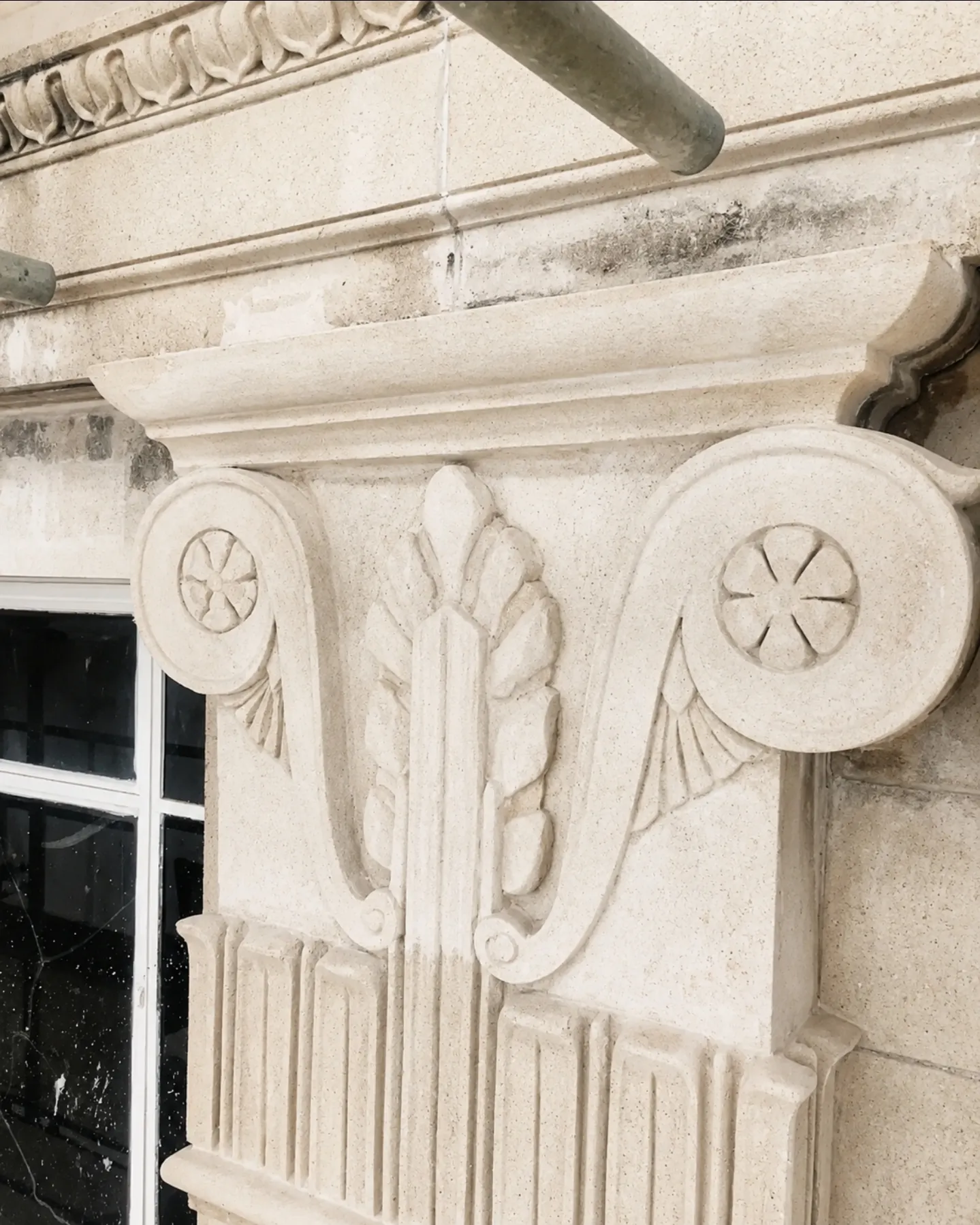
Like-for-like materials
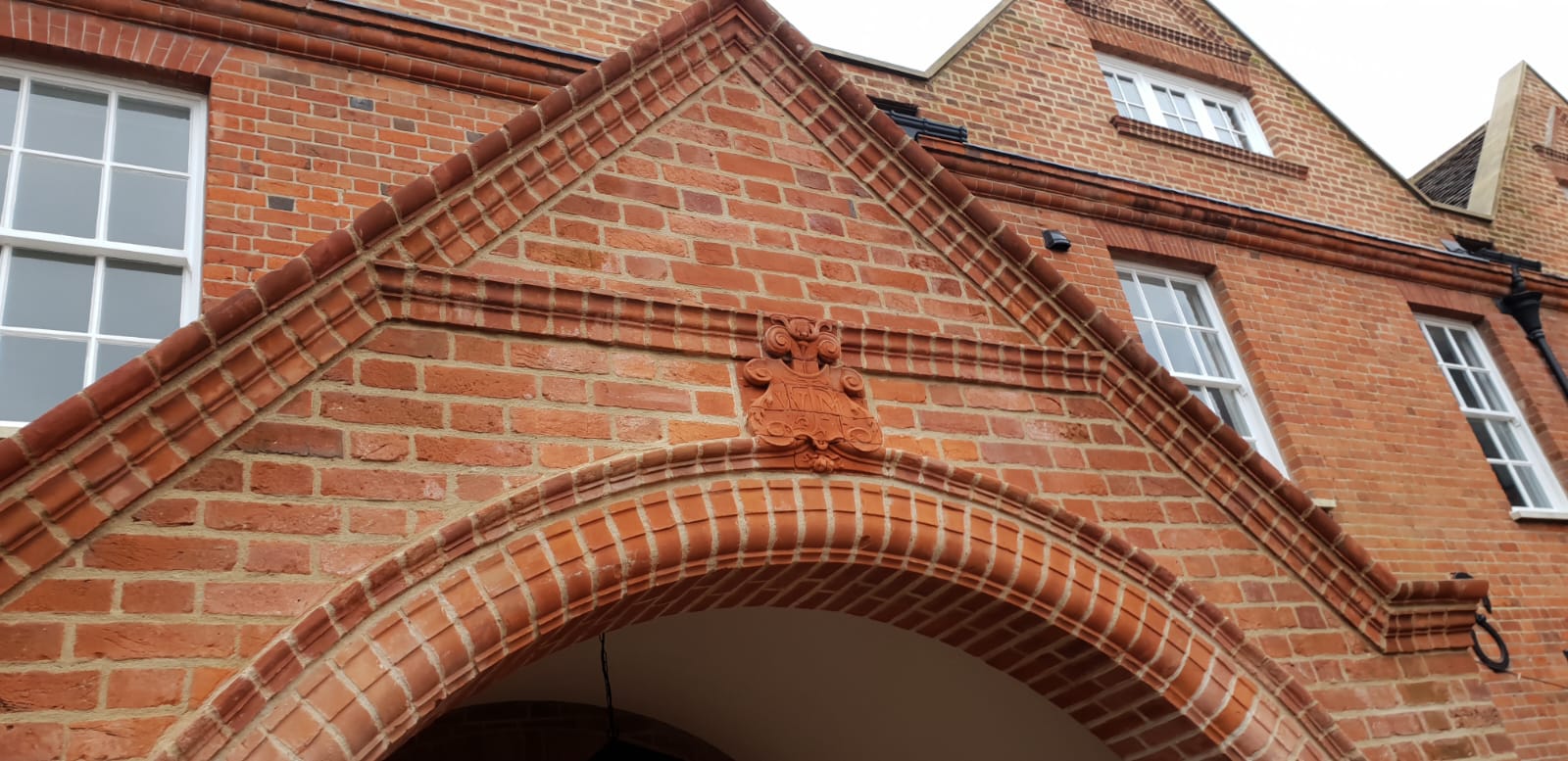
The rule on a listed building is simple: like for like. Lime mortars are matched to the original bedding mortar by sample - aggregate, colour and strength - and joints are cut and finished to the original profile. Stone is matched by type and bed, so new indents weather the same way as the blocks around them.
Reversible repairs and minimum intervention come first. Where a decayed stone can be indented rather than replaced, it is; where original brick can be spliced rather than rebuilt, it is. Cement mortars, plastic paints and hard renders have no place on the fabric - most of the damage we are called to undo on listed buildings was caused by repairs that ignored this.
Carved detail - cornices, corbels, capitals and mouldings - is taken from surviving profiles and re-run or hand-carved to match, so new work sits correctly alongside the original.
Heritage surveys and repair planning
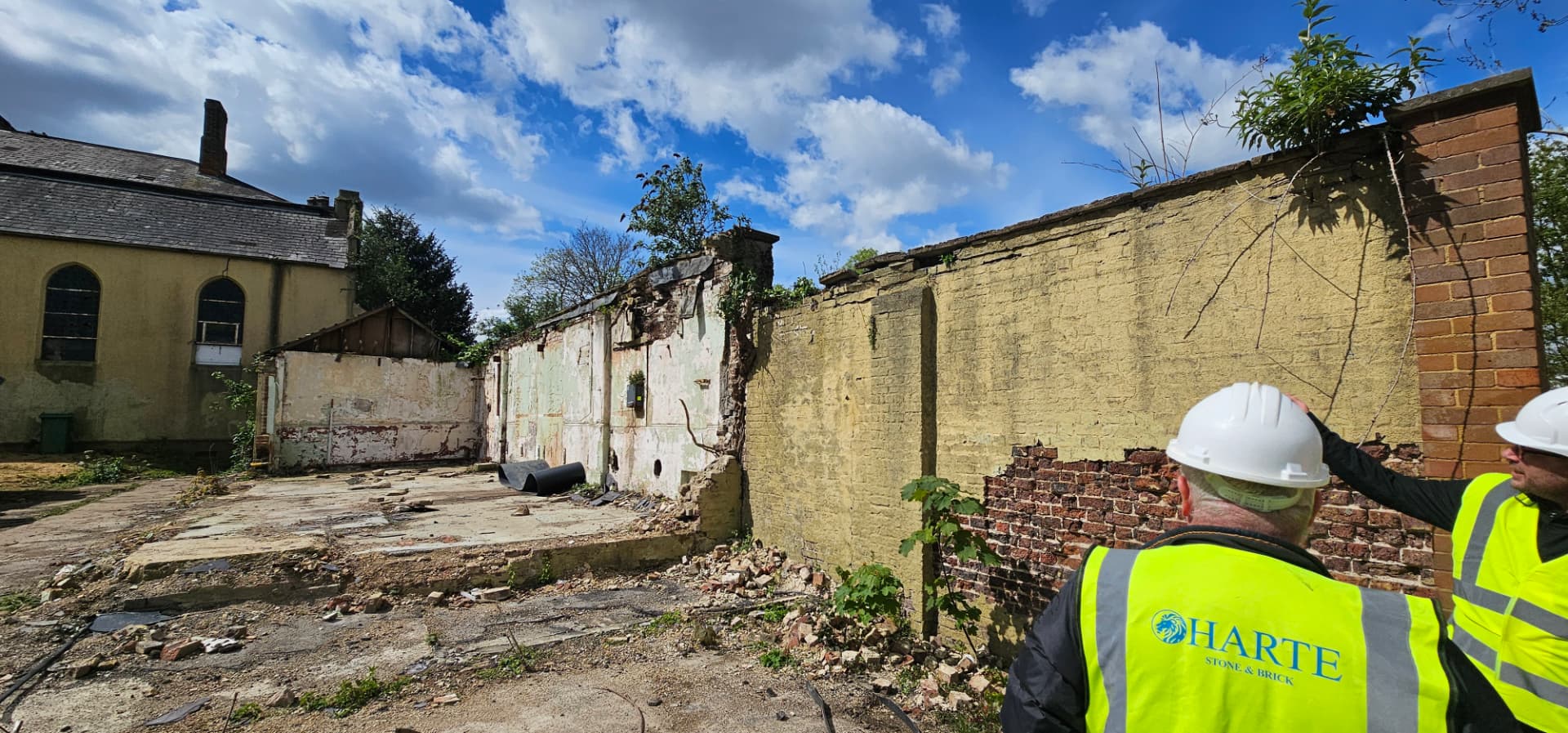
Every listed job starts with a close look at the existing fabric rather than assumptions made from the pavement. The survey identifies what is original, what has failed and how previous repairs have affected the building, so the right work can be prioritised before the facade is opened up.
Stone, brick, pointing, render and mouldings are considered together because failure in one often affects the others. Repairs can then be planned in the right order, from cleaning and opening up through to masonry repairs, repointing and final finishes.
We work with main contractors, surveyors, architects, managing agents and private owners on heritage and historic building restoration across London, phasing the works around the people using the building.
Common questions
Other services
Talk to us about your project.
A few photographs of the facade are usually enough for us to understand the scope.